A travel report
In November 2019, the situation in Libya was dire. Fierce fighting in the southern suburbs of the capital Tripoli had been going on since the beginning of the year. The battle forced more than 200000 inhabitants to flee their homes and led to tensions between the regions. On social media, the war was as intense as the one on the ground. Journalists and bloggers from the opposing western and eastern parts of the country contributed to a toxic public sphere that reminded everyone of the 2011 uprising against Muammar Gaddafi.
Breaking the Ice had organized several Libyan-Tunisian concerts and events before the current conflict. The question then was, should we continue to organise cultural events in times of war? After a meeting with the team of the Heinrich Boell Foundation in Tunis we had an answer. Libyans should not be left alone in the midst of daily reports of death and destruction in their country. The majority of Libyans were going on with their everyday lives, enjoying and creating arts and culture and did not want to be part of the conflict. The idea of Blackbox Libya was to explain the complex political situation but also to show a different and brighter side of Libya that is unknown to the world. The visual artists Tewa Barnosa and Ahmed Baroudi of the Dwaya art group from Tripoli agreed to travel to Germany and present their artworks in Heidelberg and Berlin.

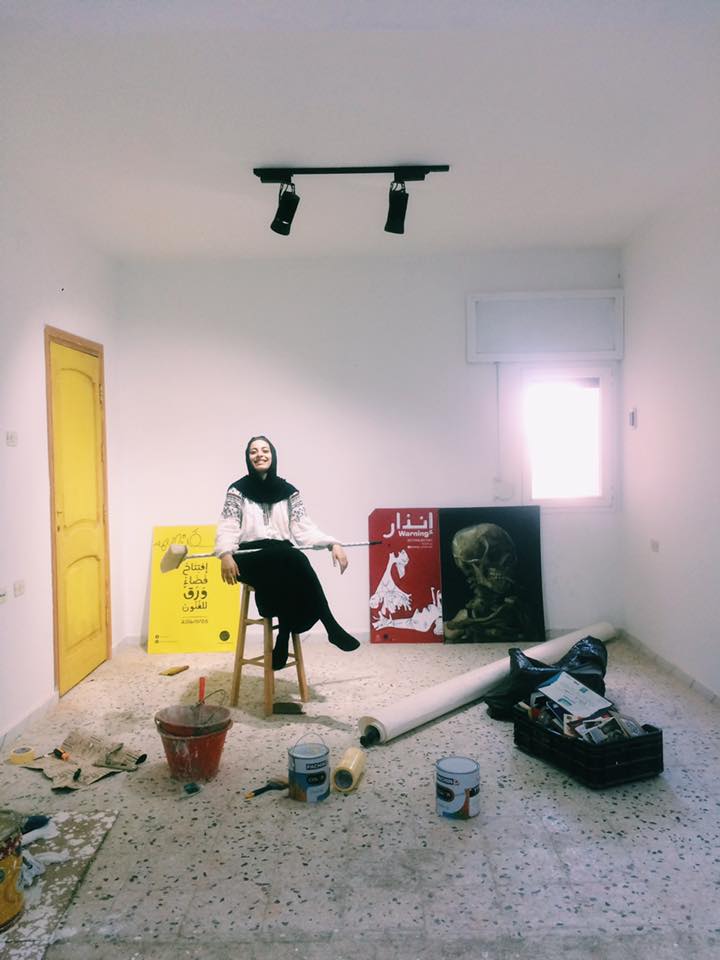
But we wanted to show music as well.The musicians Farah Elle, an up-and-coming singer from Ireland with Libyan roots, popular artists Aymen Al Houni from Benghazi and Fuad Gritli from Tripoli, agreed to join and play an additional concert in Hamburg. It would be the first time they play together. The 25-year-old Farah, a huge fan of indie pop, has lived most of her life in Dublin. Her songs included a mixture of Arabic-Libyan rhythms, beats and sounds. Aymen lived in Cairo and Greece before returning to his hometown Benghazi. Fuad was Libya`s first Libyan candidate at the very popular talent show “the Arab Voice”, which was seen by millions all over the Middle East and North Africa.
Three generations, three different music styles and three different regions. Aymen Al Houni works in his studio in Benghazi, Fuad Gritli commutes between Tripoli, Tunis and Istanbul for the production of his own TV show and Farah is performing on stage in Dublin.

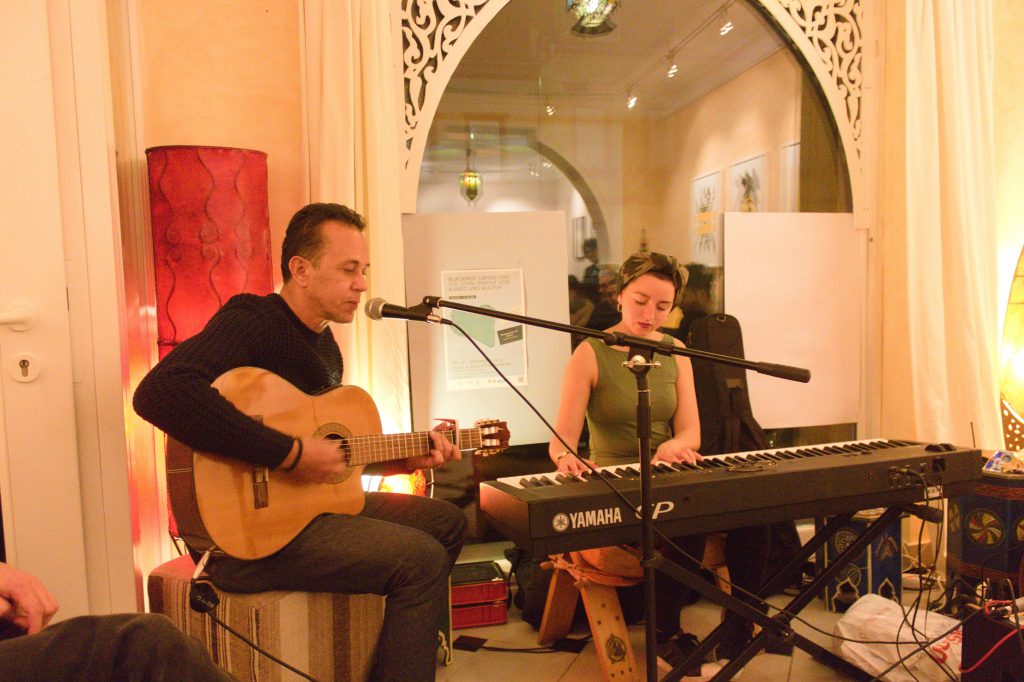
The three met for the first time in the city of Heidelberg and on November 28, 2019, they were united with the Dwaya team, Ahmed Baroudi and Tewa Barnosa, who already started preparing the exhibition of their artwork in a small but distinguished gallery. The Freunde der Arabischen Kunst und Kultur (in English, “Friends of Arabic Art and Culture”) is a project that has presented and promoted artists from North Africa and the Middle East in their gallery space “Arabeske”. Nadja and Yahya Madani, two passionate activists in the fields of art and cultural dialogue, founded the association and together with a team of volunteers organize art exhibitions, cultural talks and get-togethers since 21 years. Hosted by the Blackbox Libya project, HBS Tunis and Breaking the Ice, the first concert and podium discussion on art and politics took place at their gallery in Heidelberg. Today, Nadja retells, “It was not an easy job to run this initiative and an after-work art gallery”.
After having hosted hundreds of artists from Syria, Iraq, Palestine and Egypt, it was the first time that an event at the gallery was featuring Libyan artists. The exhibition of the Dwaya art works was also the first display of Libyan art in Southern Germany since 2011. The opening of the exhibition ended with a jam session by the three musicians. The next day, the Blackbox team invited saxophonist Yolanda Diefenbach and percussionist Santino Scavelli (members of the Oriental Music Academy Mannheim), to a music studio to prepare for their upcoming joint concert the following day. Santino and Yolanda both had previously collaborated with Brazilian and Arabic speaking musicians on stage, and brought a touch of jazz to the performance. More than 100 visitors attended the concert at the Scheune music club. Fuad and Ahmed gave a talk before the start of the show and provided the audience with insights into the cultural scene of Libya.


After two days in Heidelberg, the whole team, including the director of the Heinrich Boell Foundation office in Tunis, Heike Loeschmann, and founder of the Breaking the Ice initiative, journalist Mirco Keilberth, got to feel the hard reality of tour travelling. Instruments and suitcases had to be loaded and unloaded from cars, buses and trains on the way to Berlin. Yolanda Diefenbach Tour life meant tight schedules and complicated logistics. Especially Farah`s keyboard, weighing more than 15 kilograms and 1.8 meters long, created some headache. But it was definitely worth it.
At noon of December 3rd, a day after arriving in Berlin, the musicians were already on stage again, this time at the headquarters of the Heinrich Boell Foundation, a modern cube-like building in Berlin-Mitte. Before the concert, a podium discussion about the political situation in Libya, the core of the political part of Blackbox, was due. On two panels, the team tried to look even deeper into the Blackbox Libya project, than it did in Heidelberg. A political panel aimed at making sense of the worrisome situation on the ground.

Tewa Bernosa (Künstlerin und Kuratorin, Waraq Art Foundation), Heike Löschmann (Büroleiterin, Heinrich-Böll-Stiftung, Tunis), Ahmed Barudi (Künstler und Kurator, Dwaya Künstlerinitiative) Foto: Stephan Röhl 
Heba Shibani (Journalistin, Aktivistin, Fotografin und Filmemacherin), Mirco Keilberth (Nordafrika-Korrespondent, Libyen-Experte, Mitgründer Breaking the Ice Initiative), Elham Saudi (Direktorin, Lawyers for justice in Libya) Foto: Stephan Röhl
We had human rights activist Elham Saudi, the journalist Heba Al Shebani and Libya expert Wolfram Lacher on stage. The moderator of the panel, Mirco Keilberth is reporting about Libya since 2011. The second panel looked at the role of cultural activists and their positive contributions during the war in Tripoli, where the atmosphere was filled with hate speech. Heike Löschmann, director of the Boell foundation in Tunis, was the moderator of a vivid talk between Tewa Barnosa and Ahmed Baroudi.
The industrial area around the Panke-club in the working class district of Wedding was a surprise for many of the Libyan visitors. The walls of the club are riddled with graffiti and tags. The Breaking the Ice band was hosted by the famous New York jazz pianist Joel Holmes, who presented the artists and their work to his weekly music jamming session. More than 100 visitors from the Libyan diaspora saw for the first time a Libyan band performing on the stage of the music club. Later in the evening, they mingled with the jazz combo of Joel. New York meets Libya, Jazz meets Arabic beats; it became a true Breaking the Ice evening.


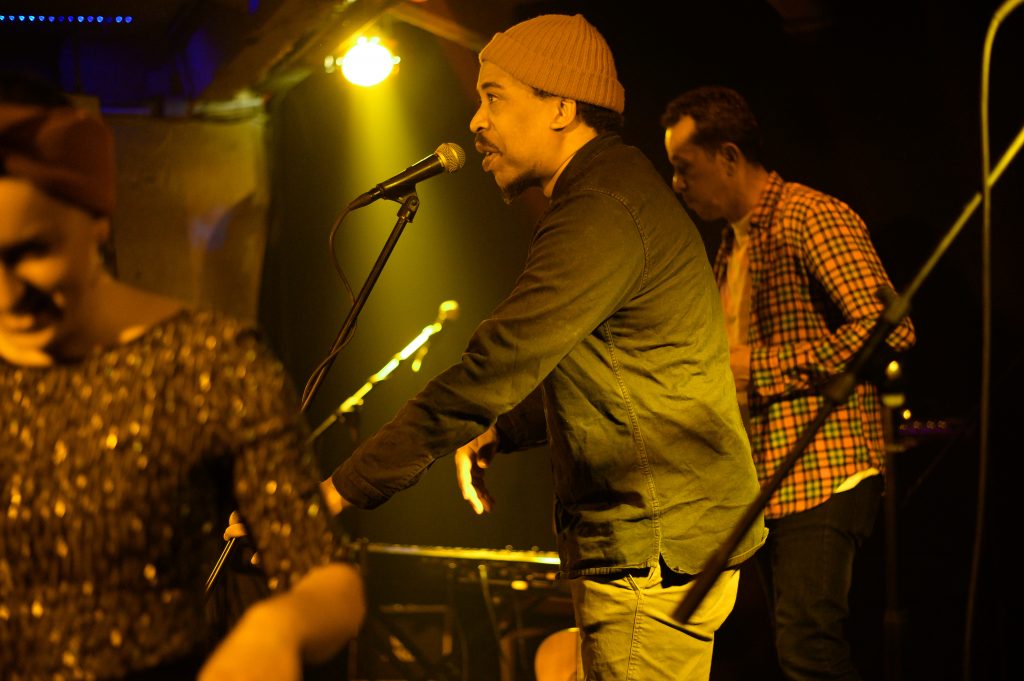
A third Berlin concert took place at Café Be’kech, one of the cradles of independent Arab culture in Berlin. The Braking the Ice band played a cozy house concert with friends of Arab art and music. Be’kech is popular among people from many different Arab countries.
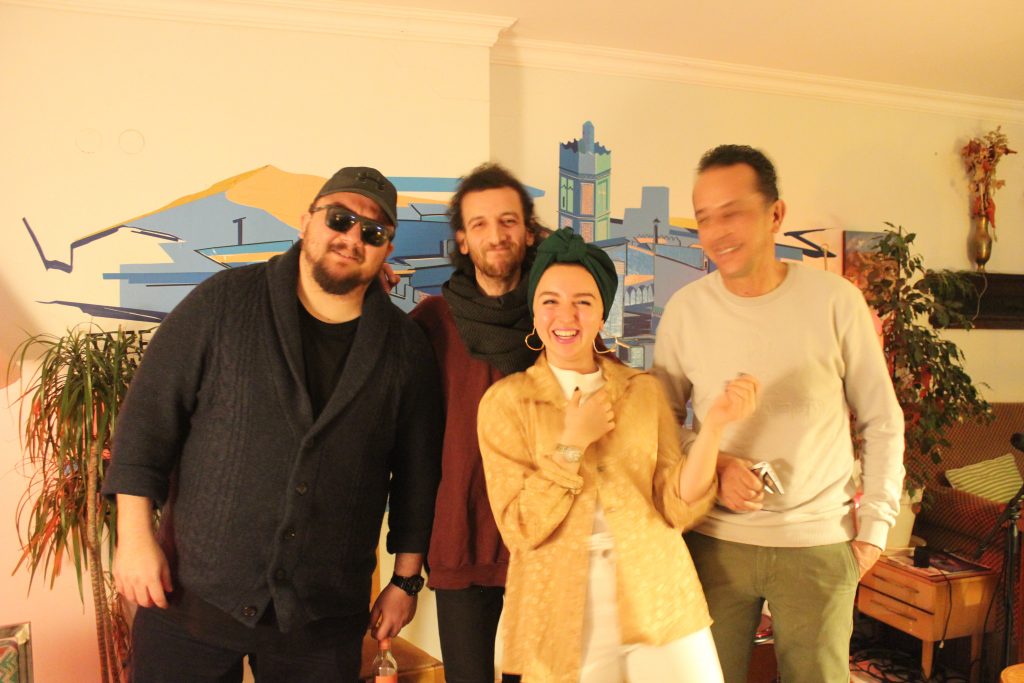

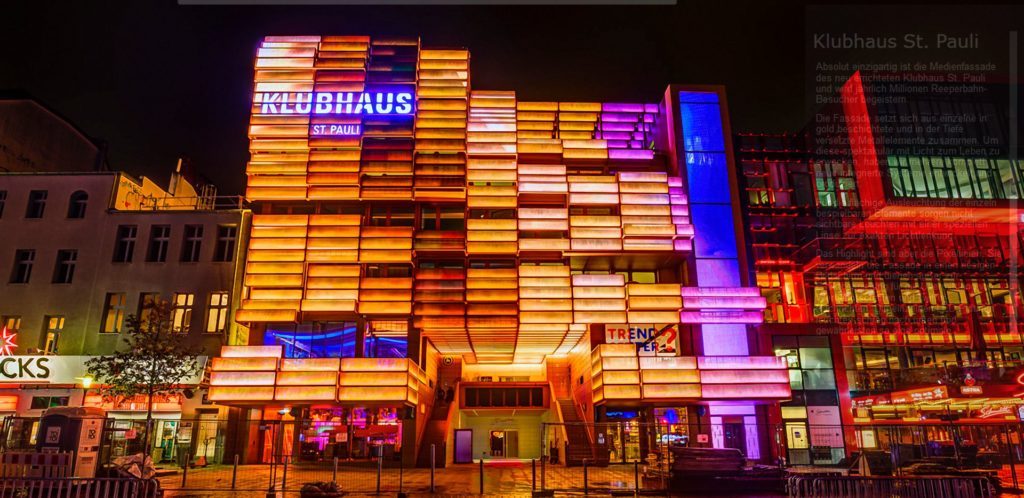
The last stop of the mini-tour was the famous nightlife district of Germany’s second city Hamburg, known for its “red light district” St. Pauli. The main street Reeperbahn near the port is also known for its vibrant music scene. Over the years, the yearly Reeperbahnfestival has evolved into a meeting point for up-and-coming bands from all over Europe. The heart and soul of the festival is a venue called Haekken.
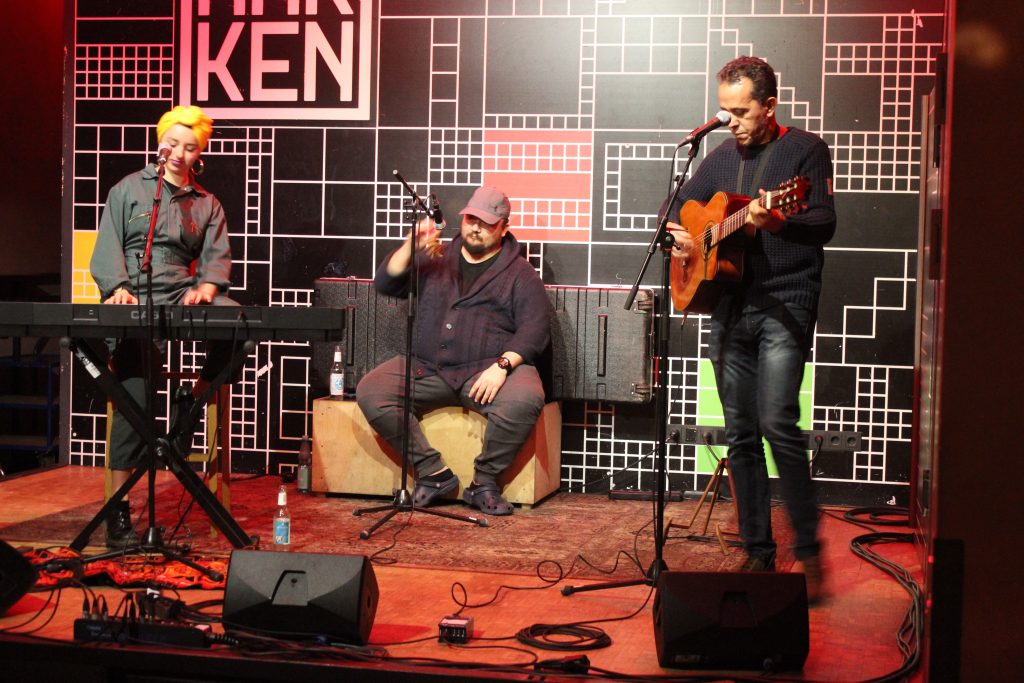
This is where the Breaking the Ice band performed their last gig of their tour on December 7. The audience included some influential music producers, who promptly invited the three musicians to next year’s Reeperbahnfestival 2020, which unfortunately was cancelled due to the Covid-19 crisis. A year after our tour, in November 2020, the Blackbox tour will restart online. Because of shutdowns and border closures Farah, Aymen and Fuad will play from where they are: Dublin, Benghazi and Istanbul. Their mission is the same: To shed more light on the Blackbox Libya through music and art.
Text and photos by Mirco Keilberth
Blackbox Libya is a cooperation of Heinrich Boell Foundation and Breaking the Ice
https://tn.boell.org/en/blackbox-libya-political-dynamics-and-spaces-artistic-intervention
Infos: Haekken Club Hamburg www.haekken.de
Café Be’kech, Berlin www.bekech.com
https://tn.boell.org/en/blackbox-libya-political-dynamics-and-spaces-artistic-intervention